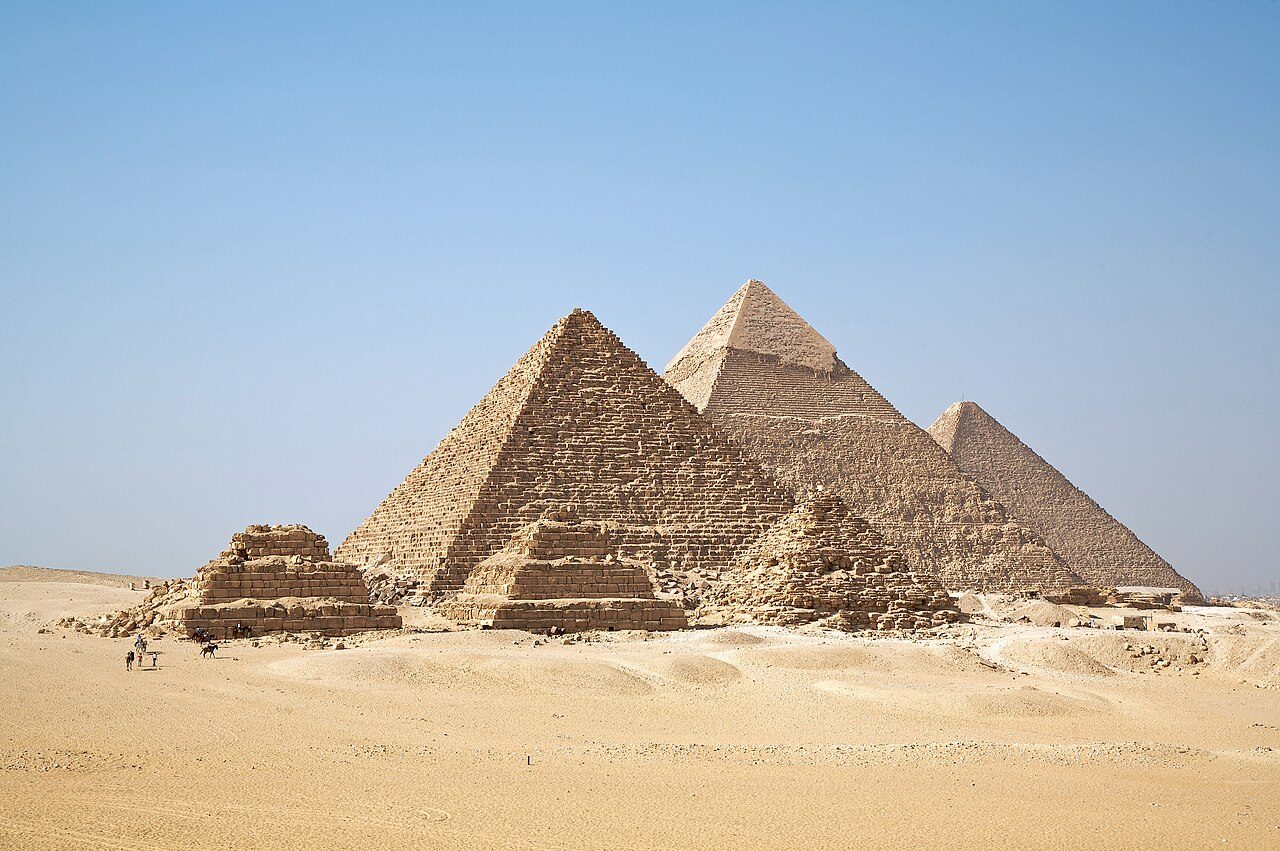
The Giza plateau holds the last standing Wonder of the ancient Mediterranean world and a Sphinx that still splits rooms between Fourth Dynasty consensus and older-weathering hypotheses. Cosmolink keeps four trays open: what Egyptologists publish; what the myths say the cosmos and the dead were for; what engineers and fringe writers claim about function; and what modern surveys (including ScanPyramids) have actually measured inside the stone.
Contested claims labeled. Every photo on this page is unique and shown in full (no cropped tops). Mesopotamia is a separate desk (Anunnaki).
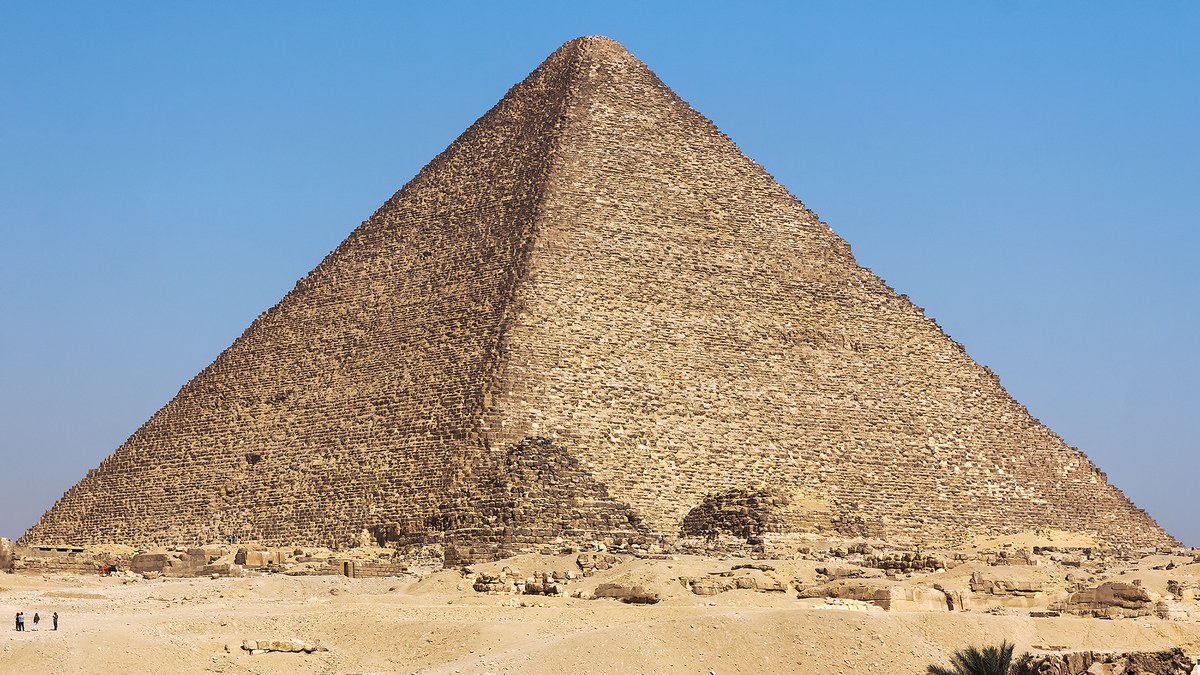
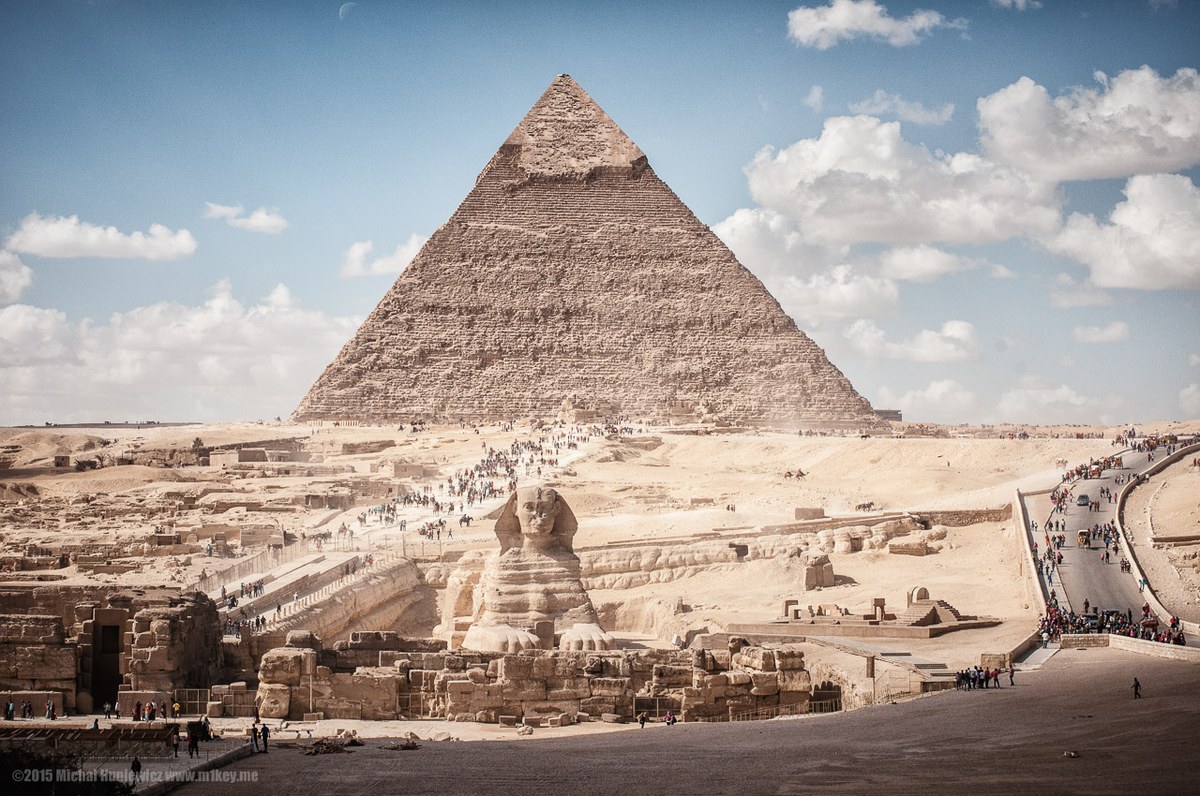
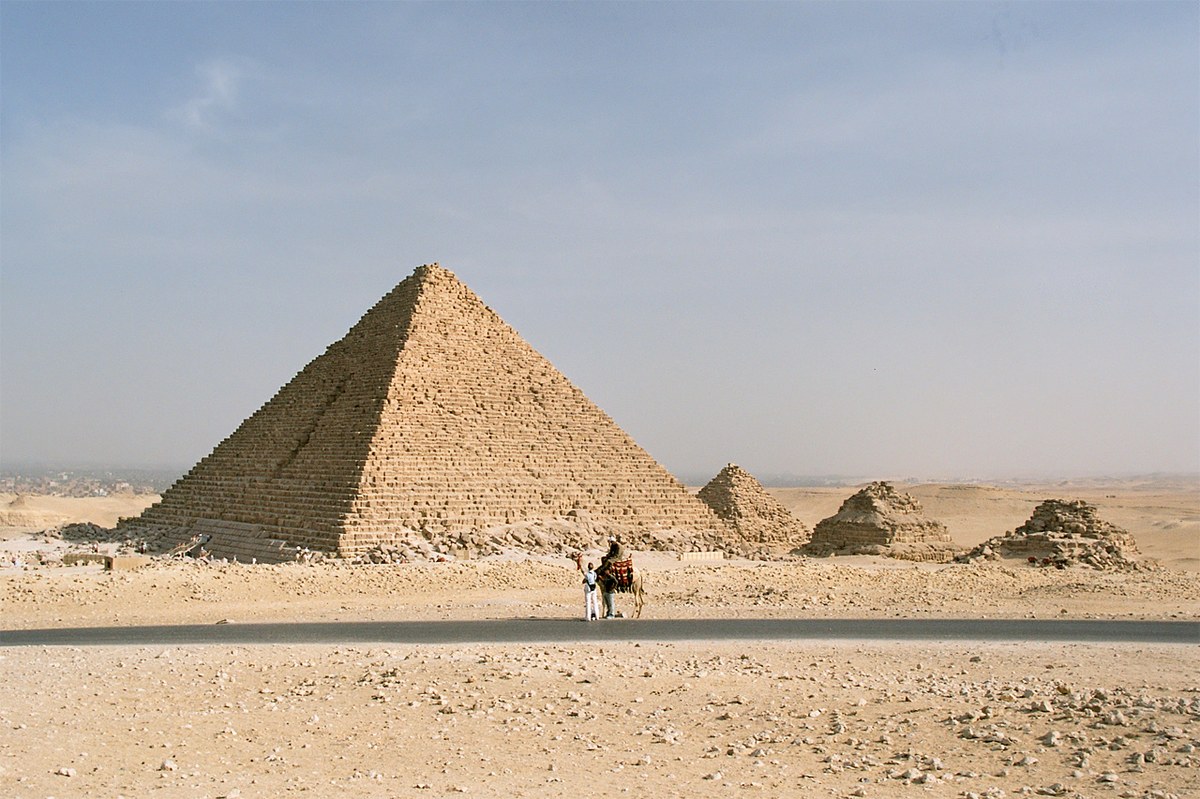
Interactive Giza plateau
Pins for Khufu, Khafre, Menkaure, the Sphinx, and the workers’ town (Heit el-Ghurab). Use the Orion line button to see the Bauval belt mapping as geometry on the ground — contested as star-to-plan proof, useful as a compare tool next to the starmap below.
Google Maps — satellite
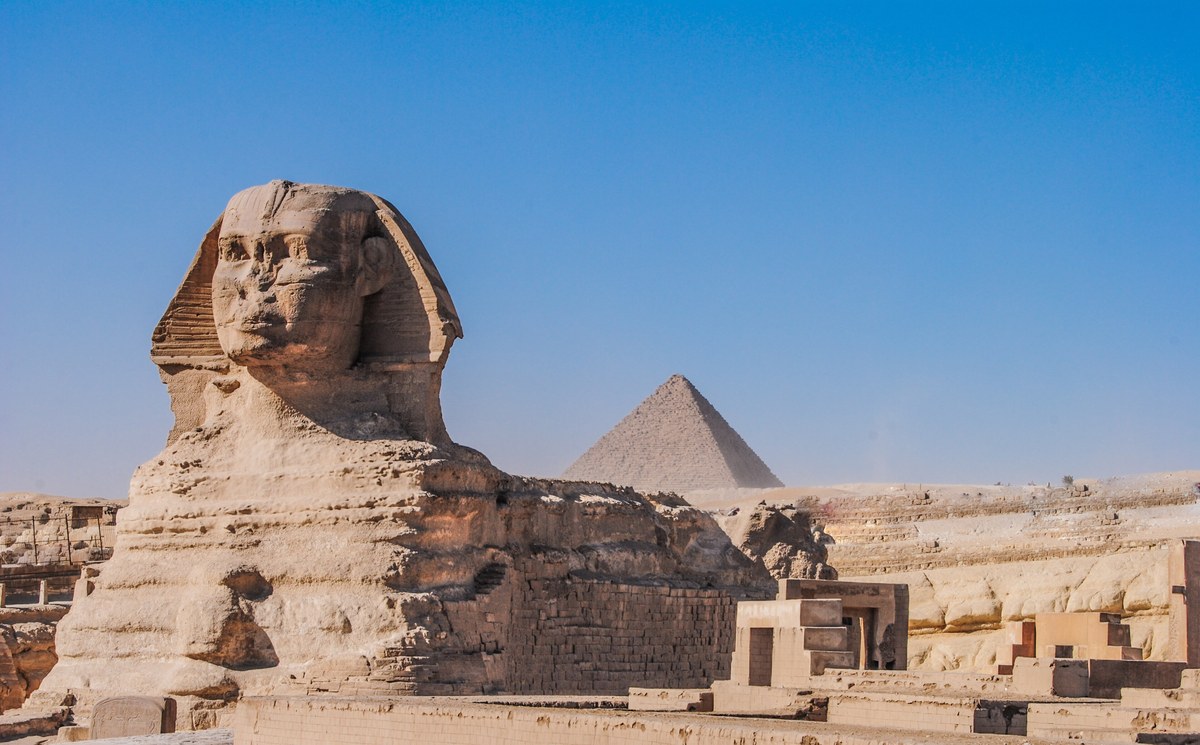
External 3D: Harvard Digital Giza ↗ · Sketchfab Khufu model ↗
What the history books say
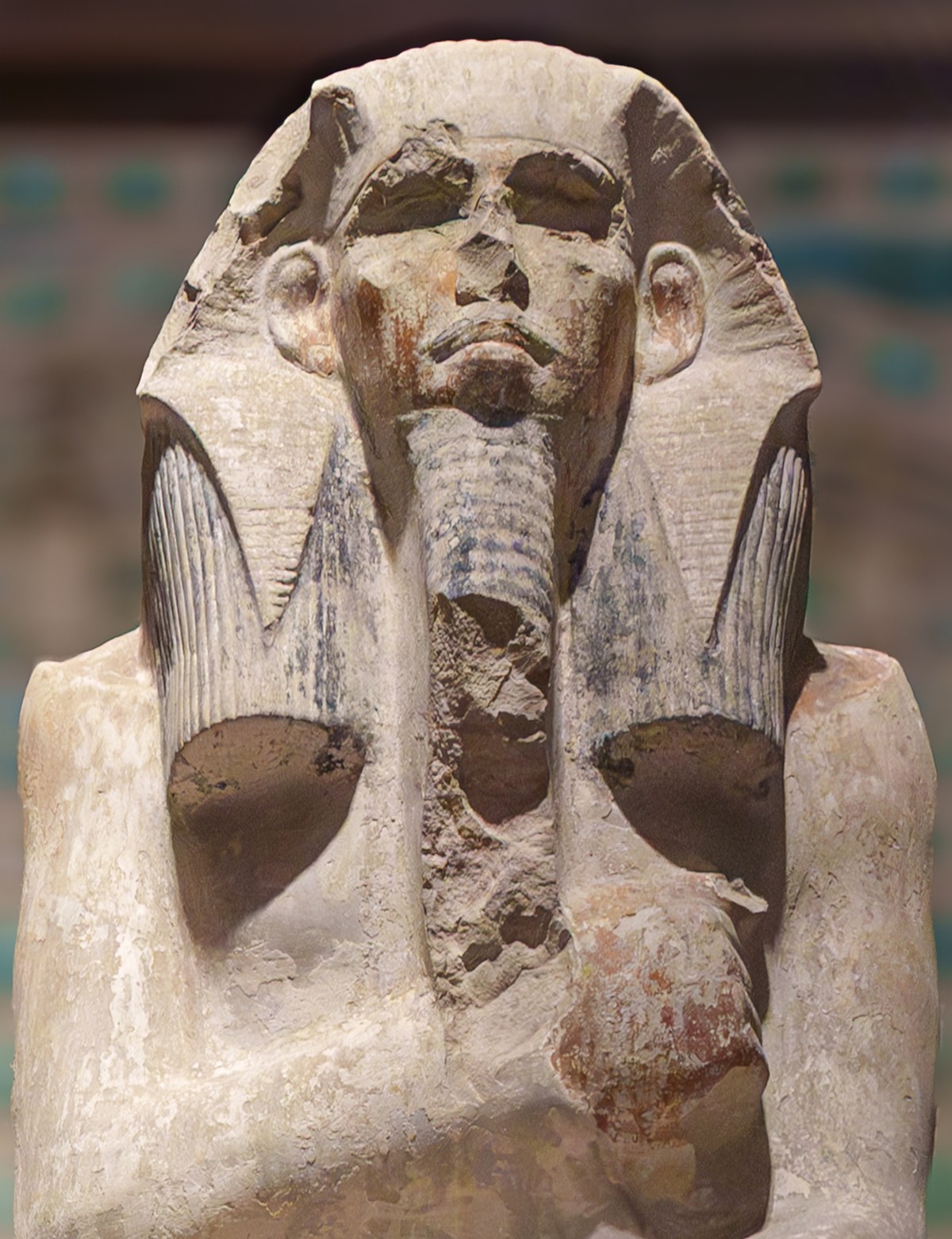
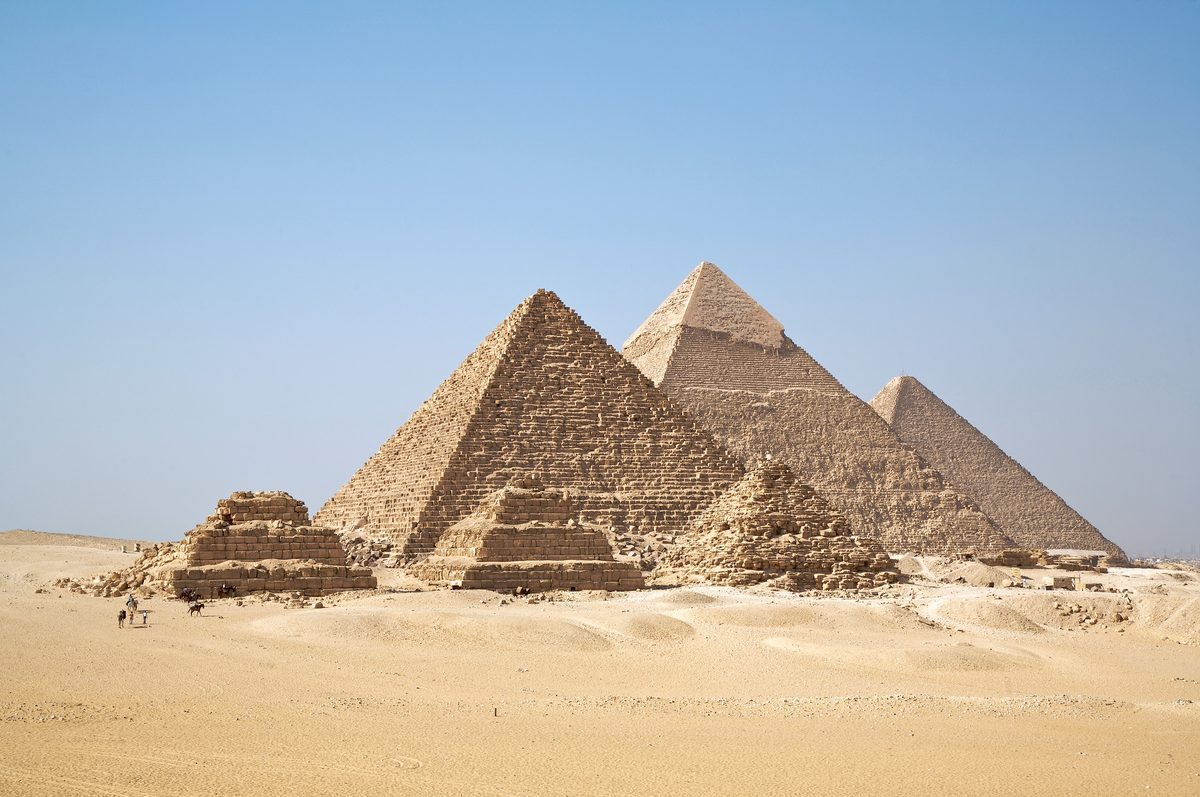
Mainstream Egyptology places the Giza pyramids in the Fourth Dynasty of the Old Kingdom — roughly the 26th century BCE depending on chronology school. Khufu (Cheops) builds the Great Pyramid; Khafre (Chephren) the second pyramid and, in the consensus reading, the Sphinx and its temples; Menkaure (Mycerinus) the third. The project sits in a longer arc that runs from Djoser’s stepped monument at Saqqara through Sneferu’s experiments at Dahshur (bent and red pyramids) into Giza’s precision.
Workforce evidence at Heit el-Ghurab — bakeries, barracks, tombs of overseers — argues for a rotating labor force of skilled Egyptians, not a cartoon of endless foreign slaves. Copper tools, quarry marks, ramp theories (straight, zigzag, internal) are debated in engineering literature; peer-reviewed consensus treats the build as extremely hard human work, not impossible magic. The Diary of Merer (papyrus) records logistics moving limestone toward the plateau in Khufu’s reign — not a full blueprint, but a bureaucratic fingerprint of the project.
The Sphinx — consensus, weathering, water
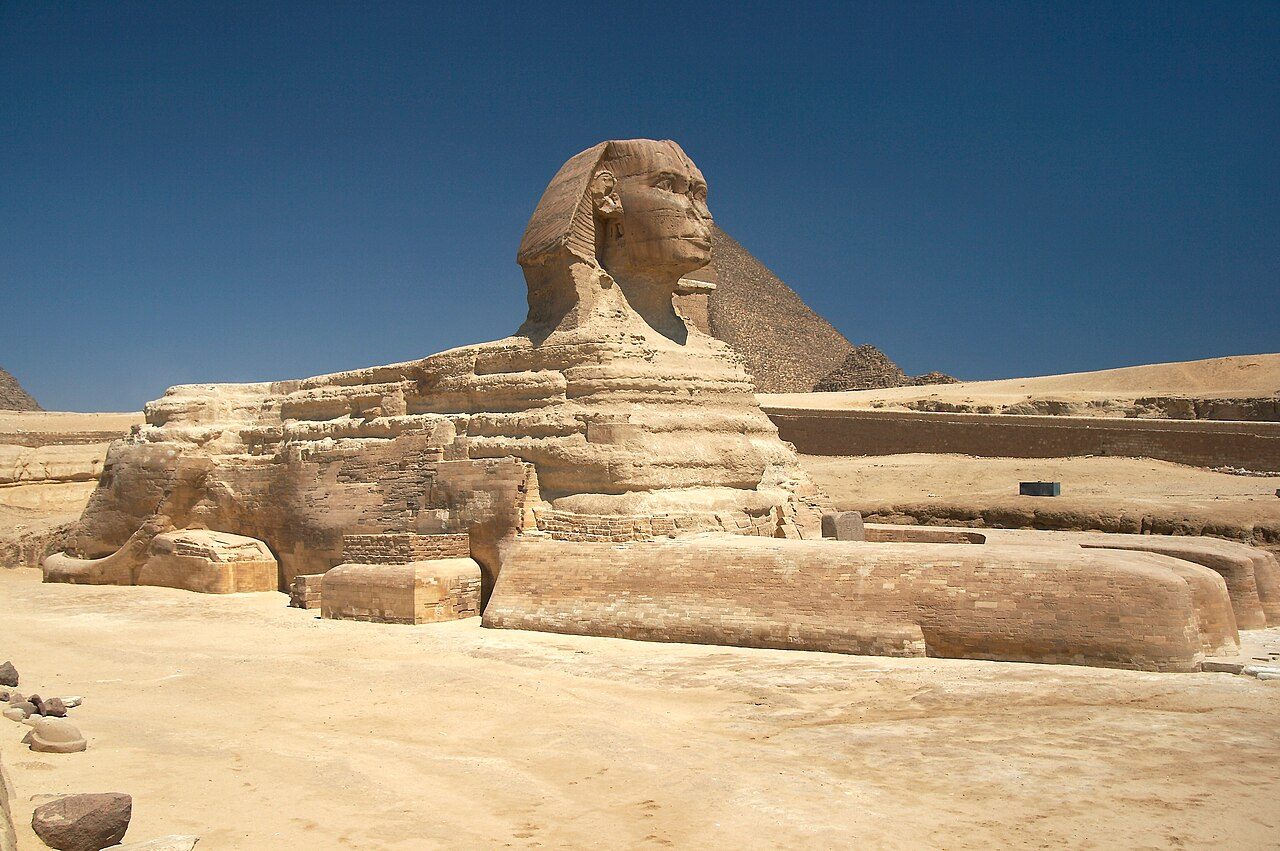
The Sphinx is a recumbent lion body with a human head, carved from the Mukattam Formation limestone of the Giza plateau. The enclosure ditch, the Sphinx Temple, and alignment with Khafre’s valley temple are central to the Egyptological case that the monument belongs to Khafre’s reign. Head-to-body proportion arguments (that the head was recarved smaller) appear in alternative literature; they are not settled proof of an older core.
Water erosion hypothesis
Geologist Robert Schoch (and earlier comments in related debates) argued that the Sphinx enclosure shows precipitation-induced weathering — rounded, deep vertical fissures consistent with prolonged rainfall — more than the wind-and-sand regime of later Egypt. If that reading is correct, the enclosure walls would imply a climate wetter than the known Old Kingdom Sahara margin, pushing the original excavation of the ditch (and thus a possible earlier lion body) back toward the wetter Holocene, often cited in round numbers around 5000–7000 BCE or earlier depending on the author.
Egyptological and other geological pushback: the limestone layers are not uniform; soft members weather differently; groundwater, Nile flood spray, and sandblasting all leave marks; dating a surface by weathering alone without a sealed archaeological sequence is fragile. Conservators have also patched and reworked the Sphinx for millennia — Roman repairs, modern consolidations — so “original surface” is a careful word.
Cosmolink take Keep the Khafre-era consensus and the weathering hypothesis in separate folders. Schoch forces a real question about climate and rock behavior. It raises climate and rock-behavior questions. Connecting that to Atlantis, Orion priesthoods, or a Hall of Records under the paws still needs stratigraphy — not only photographs of flaking walls.
Egyptian creation — how the cosmos starts
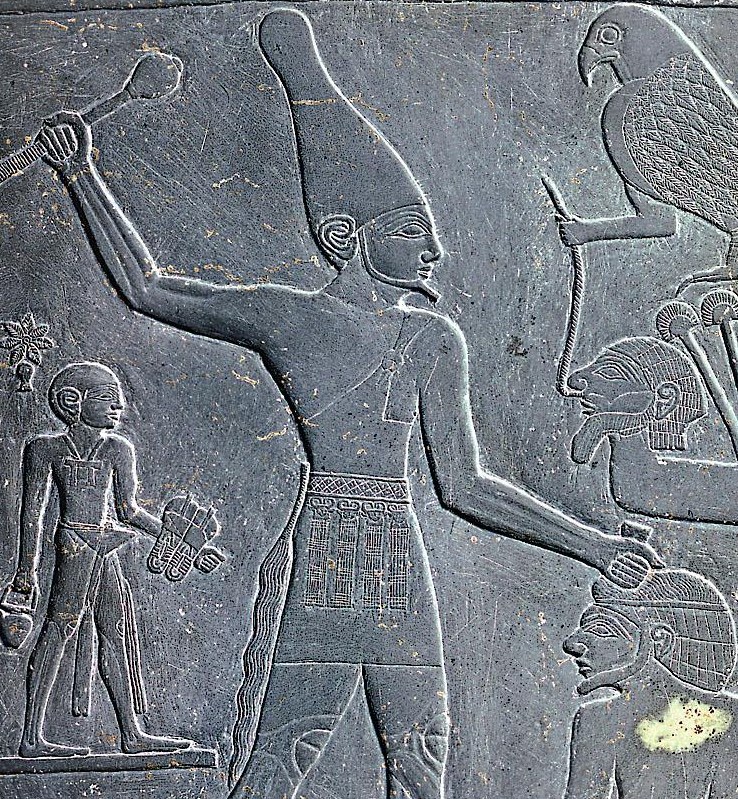
Egypt did not have one single creation text. Different cult centers told different first stories. Cosmolink keeps the main ones straight:
Heliopolis — Atum and the Ennead
At Heliopolis, Atum rises from the primeval waters of Nun on the first mound (benben). Alone, Atum produces Shu (air) and Tefnut (moisture); their children Geb (earth) and Nut (sky) are forced apart by Shu so the world has space. Osiris, Isis, Seth, and Nephthys complete the great Ennead. This is the most-taught schoolbook creation: water, mound, self-generated god, family of cosmic forces.
Memphis — Ptah creates by word and mind
The Memphite Theology (known from the Shabaka Stone tradition) elevates Ptah: he conceives creation in the heart and brings it forth by the tongue — craft-god as cosmic speaker. It is priestly competition in theological form: Memphis asserting that craft and authoritative speech underlie what Heliopolis told as Atum’s body.
Hermopolis — the Ogdoad
Eight primordial forces (the Ogdoad) in balanced pairs — darkness, infinity, hiddenness, flood waters — interact until the lotus or egg of the sun appears. Different images, same problem: how does ordered light come out of undifferentiated water.
Theban Amun
Later New Kingdom theology elevates Amun (“the hidden one”) as transcendent creator behind other names — a political-theological rise matching Thebes’ power.
Cosmolink take Creation myths explain why temples are mounds, why kings renew order (maat) against chaos (isfet), and why the dead need speech and craft to rise. They are not construction manuals for Giza. When ancient-astronaut shows treat Ptah’s “word” as alien software, they are sampling Memphis while ignoring the priesthood fight.
Myths, the dead, and sky books
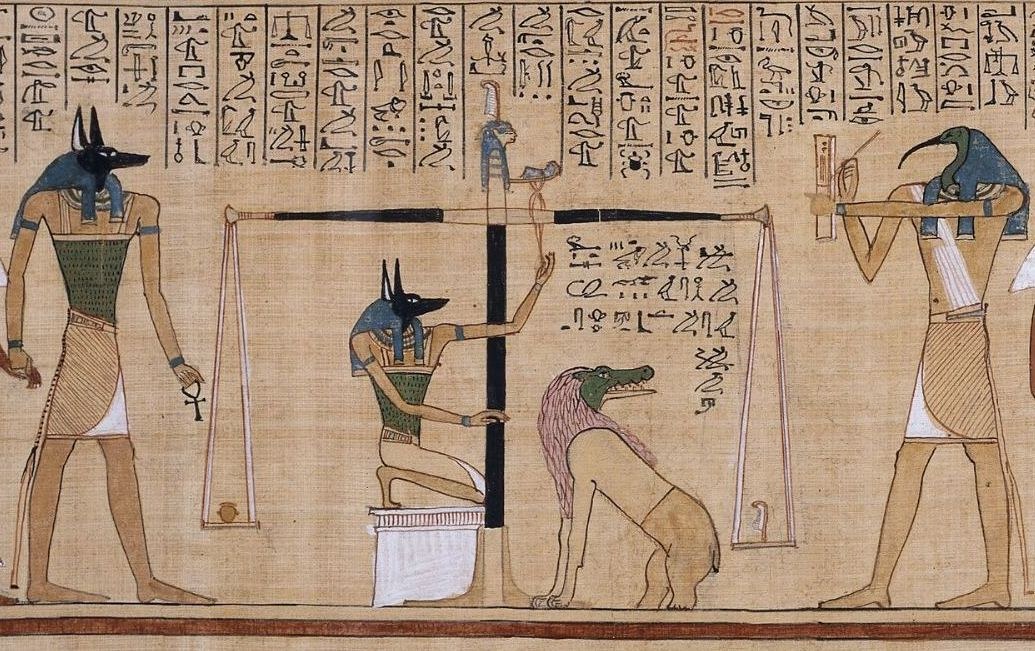
Osiris is murdered and dismembered by Seth, reassembled by Isis (and Nephthys); Horus avenges and inherits. The dead king (and later any justified dead) joins Osiris; the living king is Horus on earth. That cycle is the backbone of funerary religion.
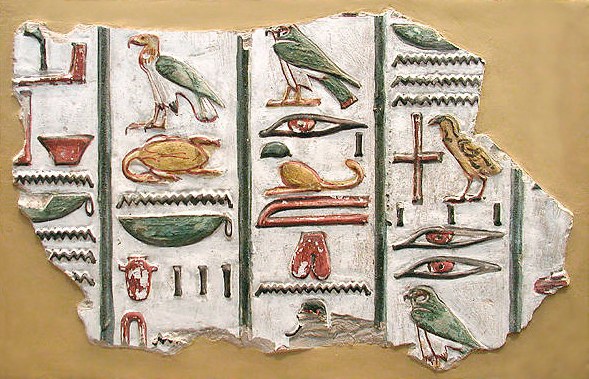
Pyramid Texts (Old Kingdom royal pyramids) are the oldest extensive religious corpus: ascent spells, offering formulas, identification with stars and gods. Coffin Texts expand access in the Middle Kingdom. The Book of the Dead (New Kingdom and later) is a modular library of spells — weighing of the heart against maat’s feather, gates, demons, the solar barque’s night journey through the Duat.
Zep Tepi — the “First Time” — is the mythic age when order was instituted. Alternative writers treat it as a lost high civilization. In Egyptian usage it is liturgical and royal: every temple foundation and festival re-creates the first moment. Cosmolink files both the Egyptological reading and the fringe expansion — labeled.
Thoth, writing and the moon, and Edgar Cayce’s Hall of Records under the Sphinx, belong to modern psychic archaeology and tourism lore. They shaped dig dreams and TV cold opens. They are not an excavation catalog entry until someone opens a sealed archive with provenance.
What was it all for? — use hypotheses
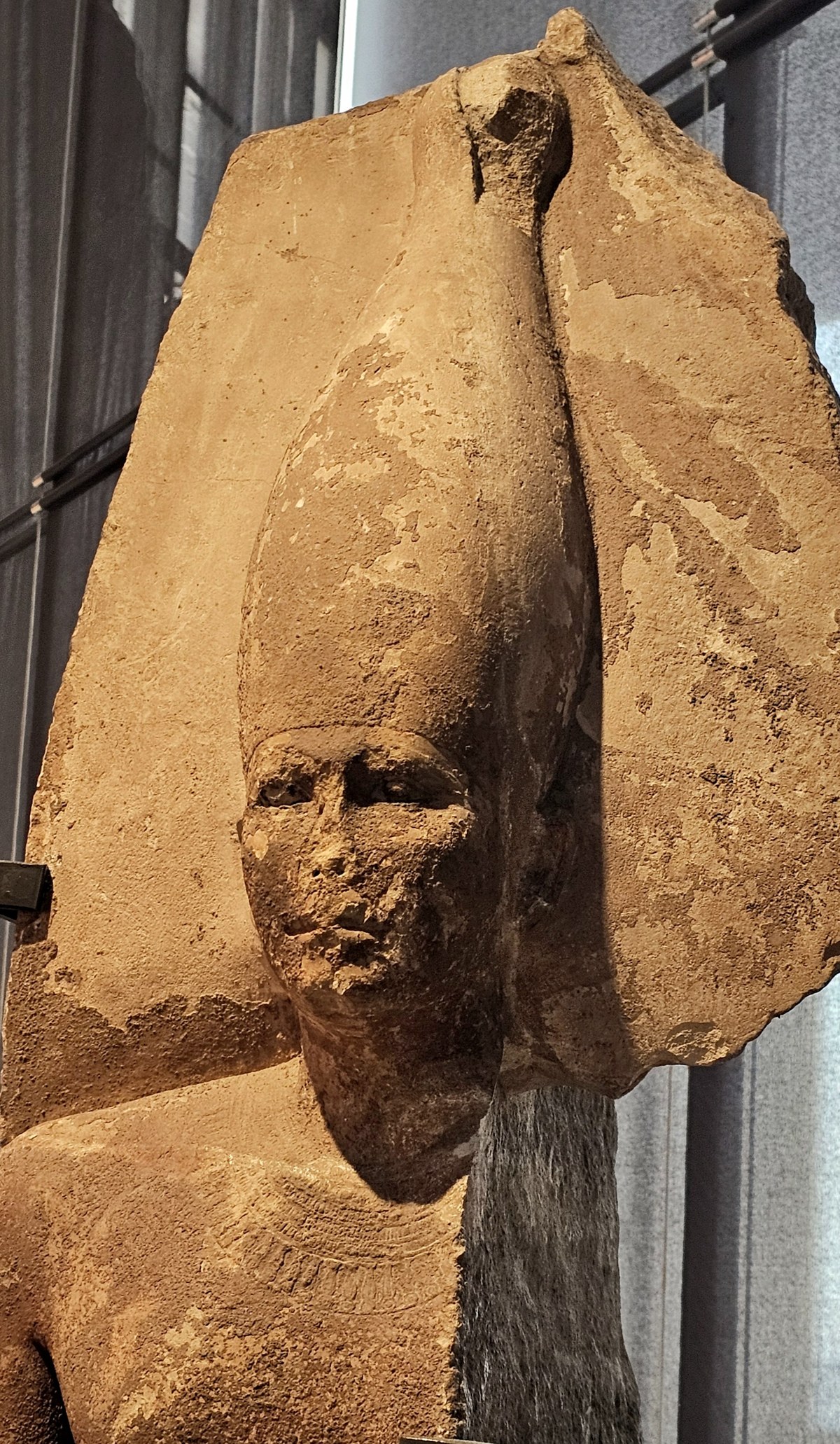
Tomb / resurrection machine (consensus frame): pyramids as monumental tombs and ritual engines for the king’s ascent — linked to solar and stellar destiny, offerings, and the state cult. Empty sarcophagi and missing bodies complicate tourism slogans but do not erase the funerary texts and temple economies around the monuments.
Initiation and public theology: the plateau as a stage where living and dead, king and cosmos, are displayed — processional approaches, valley temples, causeways.
Power plant / machine hypotheses (Christopher Dunn and related): precision stonework read as industrial tolerance; King’s Chamber as resonant device. Cosmolink files this as contested engineering metaphor. It has not displaced funerary archaeology in peer review; it does force attention to craft quality.
Star clock / Orion ritual landscape (Bauval et al.): ground plan as Orion’s belt; shafts as stellar alignments at specific epochs. Partly measurable (shaft angles, azimuths); heavily contested as a single master plan. Use the map Orion line and starmap as compare tools.
Survey marker / geodetic allegory (fringe metrology): claims that Giza encodes Earth dimensions, speed of light, or map projections. The speed-of-light latitude meme (29.9792458°N ≈ 299,792,458 m/s) is a modern metric coincidence — meters and decimal latitude are not Old Kingdom units (see Snopes / Full Fact critiques). Cosmolink keeps the joke and the measurement separate from Khufu’s intent.
Cosmolink take Function can be plural: tomb + ritual landscape + political billboard. Machine and star-map readings need instruments and editions, not only awe. The bent pyramid already shows human trial-and-error. That supports skilled builders learning, not a single dropped-in blueprint from outside.
Cosmolink take — measurements & Orion
Base orientation of the Great Pyramid is extraordinarily close to cardinal — often cited within a few arcminutes. Side lengths and casing quality are elite. π and φ show up if you choose the right ratios; selective metrology can find almost any constant.
Orion Correlation Theory: three pyramids ↔ three belt stars; Nile ↔ Milky Way in wider versions; shafts toward Orion/Sirius/Thuban at chosen dates. Egyptology pushback is strong on the “perfect map” claim; the belt offset matching Menkaure/Mintaka is the part that keeps returning in debate.

Latitude 29.9792458°N can be drawn through the pyramid mass; the apex is not exactly that line; meters did not exist for Khufu. Interesting as a modern curiosity. Weak as evidence of encoded vacuum lightspeed.
Ancient Aliens & media
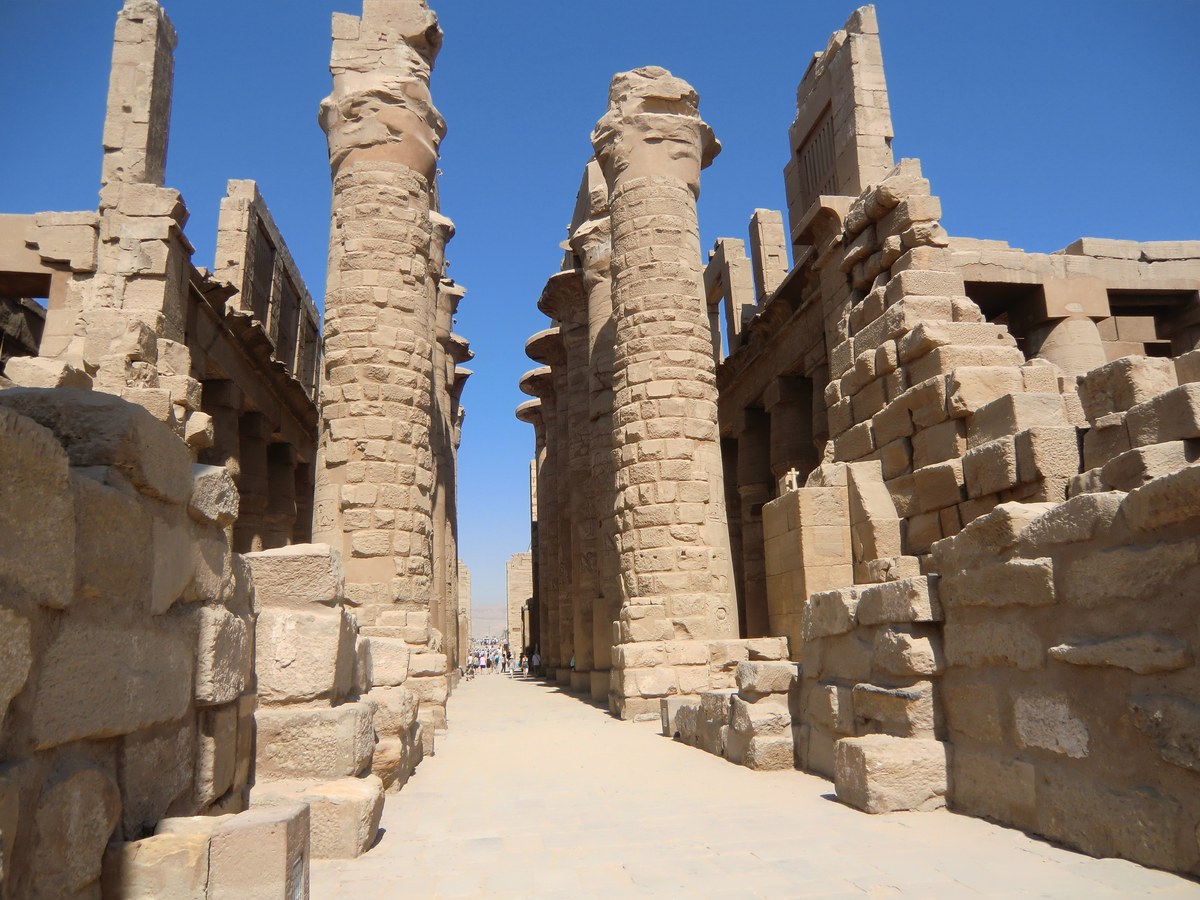
Recurring beats: precision cold opens; power-plant hour; Sphinx water-erosion hour; Gantenbrink’s Door / robot shafts; Bauval/Hancock guest desks. Watch with the history section and Schoch’s papers (and their critics) open — not as a substitute for them.
Weird findings — voids, shafts, surveys
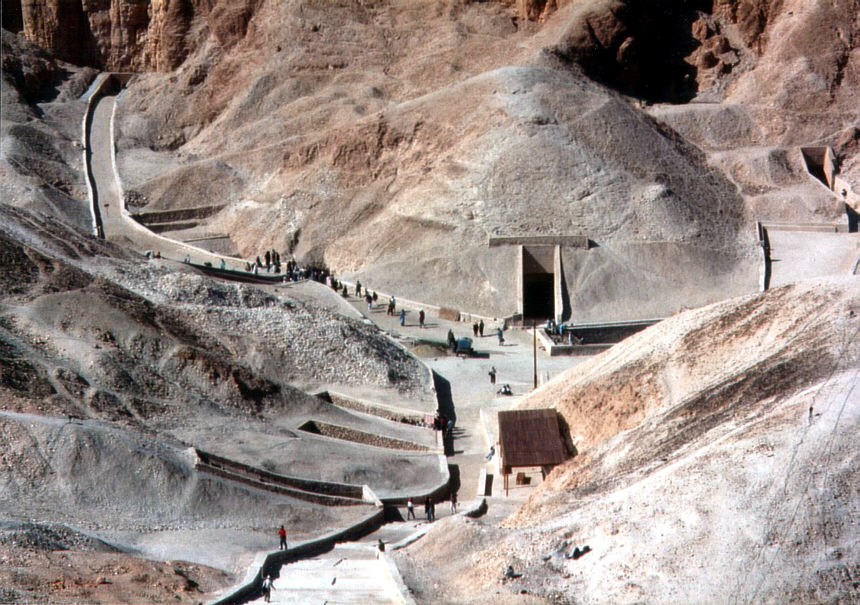
ScanPyramids muon tomography reported a large void above the Grand Gallery in Khufu (Nature, 2017) and follow-on work continues. That is peer-reviewed instrumentation talking about empty volume — not a throne room photo. Relieving chambers, Queen’s Chamber shafts, Gantenbrink’s Door: real features with long exploration histories. Viral “alien GPS” and underground city claims need separate evidence standards; Cosmolink labels them contested until methods and data are public.
Live cams & plateau feeds
Many “live pyramid cams” go offline or block embeds. Cosmolink links out rather than fake a live picture.

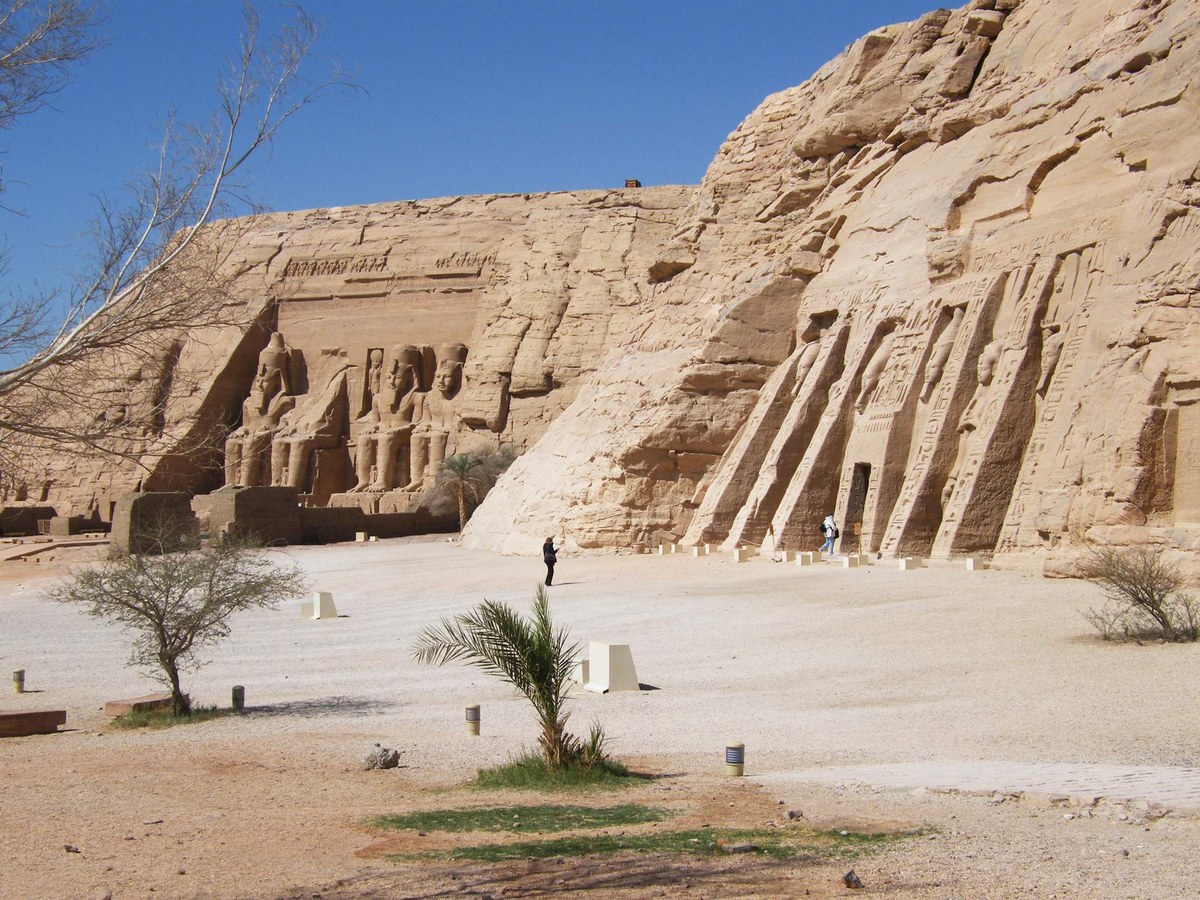
Interactive starmap — Orion over Giza
Interactive sky survey centered on Orion (Aladin Lite). Pan and zoom; belt stars are marked for Bauval compare with the map’s Orion line. For a true horizon view from the plateau, open Stellarium Web and set location to Giza (~29.98°N, 31.13°E).
Belt: Alnitak, Alnilam, Mintaka — same offset idea as Khufu → Khafre → Menkaure. Horizon planetarium: Stellarium Web ↗.